
Working Group Avian Morphology

Overview

Andrei V. Zinoviev. Working Group Avian MorphologyThe International Working Group Avian Morphology (WGAM) is an International Ornithologists’ Union (IOU) Working Group devoted to the advancement of comparative, functional, developmental, and evolutionary morphology of birds. Established at the 26th International Ornithological Congress in Tokyo in 2014, WGAM provides an international framework for coordinating research in avian morphology from both basic and applied perspectives, while fostering exchange among anatomists, functional morphologists, paleontologists, developmental biologists, biomechanists, museum specialists, and taxonomic experts.
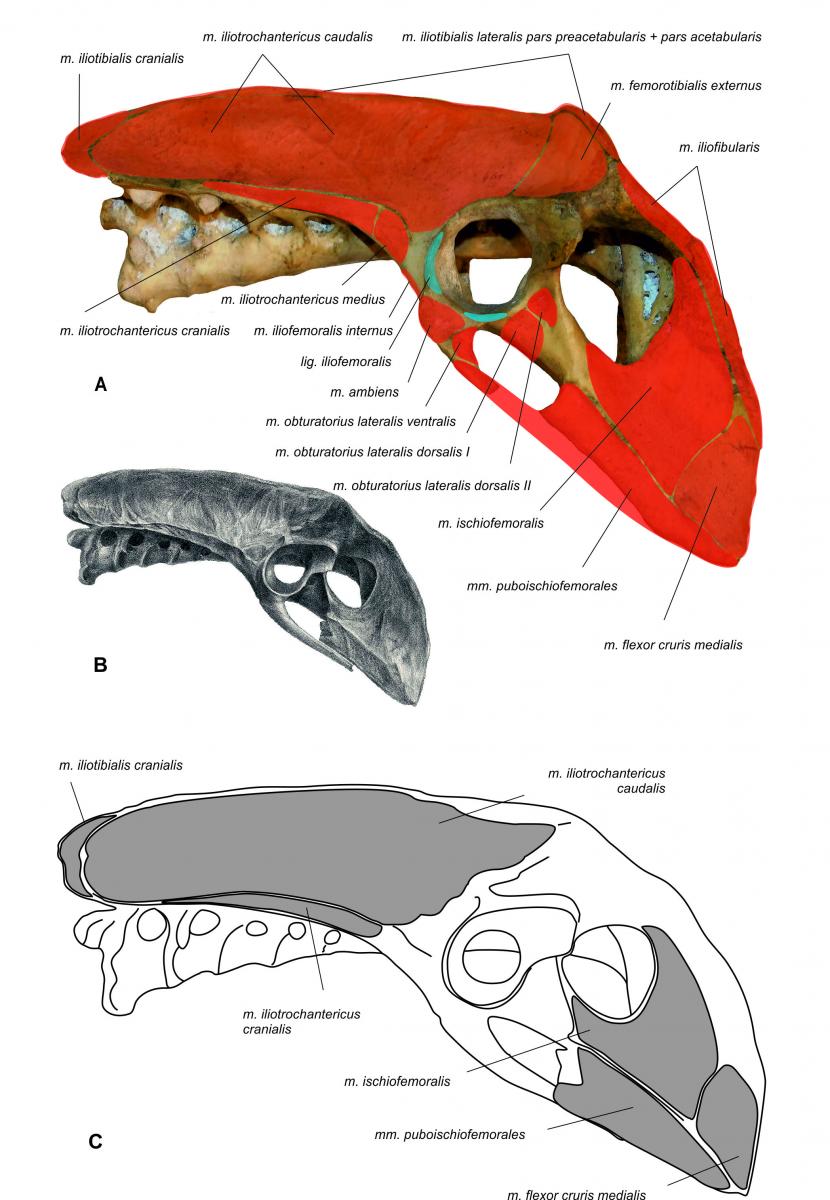
WGAM views morphology not as a merely descriptive enterprise, but as a central integrative discipline in ornithology. Morphological evidence underpins hypotheses about function, adaptation, ontogeny, phylogeny, macroevolution, and biodiversity documentation. In the contemporary research landscape, classical anatomical expertise is increasingly strengthened by three-dimensional imaging, geometric morphometrics, phylogenetic comparative methods, histology, finite element analysis, soft-tissue visualization, and paleontological discovery. WGAM therefore aims to cultivate a genuinely integrative community in which traditional descriptive rigor and modern analytical approaches are explicitly brought into dialogue.

Andrei V. Zinoviev. Working Group Avian Morphology

Mission

The mission of WGAM is to promote and coordinate international research on avian morphology; to facilitate the exchange of morphological literature, images, data, and ideas; to support the translation and wider accessibility of important works in avian anatomy and functional morphology; and to contribute to the refinement, stabilization, and long-term maintenance of avian anatomical terminology.

In practical terms, WGAM seeks to provide the morphological community with a durable scholarly platform comparable in coherence and usefulness to the resources developed by other IOU Working Groups in such domains as nomenclature, checklists, bird marking, regional collaboration, and ethics. The group therefore combines scientific communication with the curation of shared resources, the formulation of standards, and the organization of collaborative initiatives under IOU auspices.

Scientific Rationale

Birds constitute one of the most intensively studied vertebrate groups, yet major gaps persist in the comparative documentation of musculoskeletal systems, visceral anatomy, ontogenetic variation, and the anatomical correlates of ecology and behavior. At the same time, many modern datasets — whether biomechanical, developmental, paleontological, or phylogenetic — depend upon careful primary anatomical interpretation. The continued vitality of avian morphology therefore requires both preservation of classical expertise and active engagement with emerging methodologies.

Recent decades have demonstrated the exceptional explanatory power of integrative morphology. High-resolution CT and synchrotron imaging, digital dissection, histological reconstruction, geometric morphometrics, and biomechanical modelling have revealed new dimensions of variation in the skull, syrinx, postcranial skeleton, musculature, and soft tissues. These approaches have deepened understanding of locomotion, feeding, vocalization, ontogeny, and the dinosaur–bird transition. Yet they remain most informative when grounded in rigorous homology assessment, terminology, and museum-based comparative anatomy. WGAM therefore advocates a pluralistic but methodologically disciplined conception of morphology as the indispensable interface between structure, function, and evolution.

Scope of Activities

WGAM welcomes research and collaboration across the full range of avian morphological disciplines, including but not limited to: gross anatomy; osteology; myology; arthrology; splanchnology; neuroanatomy; sensory morphology; integument and feather structure; embryology and postnatal development; functional and experimental morphology; biomechanical modelling; geometric morphometrics; comparative histology; imaging-based anatomy; paleornithology and fossil avian morphology; phylogenetic interpretation of morphological characters; and the history and terminology of avian anatomical science.

Particular emphasis is placed on research areas in which morphology serves as a common language across disciplinary boundaries: (1) the integration of anatomy with biomechanics and locomotor analysis; (2) the synthesis of comparative morphology with phylogenetic and macroevolutionary inference; (3) the relationship between developmental trajectories and adult phenotypic diversity; (4) the interpretation of fossil evidence relevant to the origin and radiation of birds; and (5) the construction of accessible, standardized reference resources for the broader ornithological community.

Working Group Avian Morphology. Andrei V. Zinoviev

Strategic Objectives, 2026–2030

1. To maintain and expand an international scholarly network for avian morphologists, including senior specialists, early-career researchers, students, museum curators, and allied experts.
2. To strengthen WGAM’s digital presence within the IOU website as a curated portal for announcements, collaborative opportunities, bibliographic resources, and teaching materials.
3. To continue development of an online, updateable framework for avian anatomical terminology, including work toward a renewed Nomina Anatomica Avium resource and associated explanatory materials.
4. To promote the assembly of a digital library of significant publications in avian morphology, including historically important literature and publications that are difficult to access internationally.
5. To facilitate the translation into English of selected influential works in avian anatomy and morphology where such translation would substantially broaden scholarly access.
6. To encourage community discussion of best practices in specimen-based anatomy, image-based morphology, terminology, character documentation, and data archiving.
7. To organize symposia, round-table discussions, workshops, and comparable events at each International Ornithological Congress, in accordance with IOU Working Group guidelines.
8. To promote global participation in avian morphology, with special attention to scholars and collections in regions that remain underrepresented in international morphological synthesis.

Organization and Mode of Operation

Andrei V. Zinoviev. Working Group Avian MorphologyWGAM operates within the framework established for IOU Working Groups. In keeping with IOU policy, the group is conceived as an international body of experts led by a Chair and Co-Chair or Vice-Chair, with additional coordinators, members, and consultants as appropriate. The group reports its activities to the IOU before and after each International Ornithological Congress, organizes a Congress-linked scientific activity relevant to its mission, and maintains updated information on the IOU website.

WGAM further adopts several proven features visible across other IOU Working Groups. As in the Working Group on Avian Nomenclature, it aims to provide stable, well-argued expert guidance in a domain where precision and continuity matter. As in the Working Group on Bird Marking, it recognizes the value of community standards and reference documents. As in the Working Group on Gondwanan Ornithology and the Working Group Asian Ornithology, it seeks to reduce geographic fragmentation and stimulate collaboration across regions. As in the Working Group Ethics in Ornithology, it recognizes that some guidance documents must remain living documents, updated as methods and needs evolve. Accordingly, WGAM’s preferred mode of operation combines scholarly discussion, curated resources, consensus-building, and periodic formal outputs.

Current Leadership and Coordination

Chair: Andrei V. Zinoviev (Tver State University, Tver, Russia).

Vice-Chair: Ron A. Meyers (Weber State University, Ogden, USA).

Advisor: Dominique G. Homberger (Louisiana State University, Baton Rouge, USA).

Nomina Anatomica Avium and Library Coordination: Ron A. Meyers.

Translation Coordination: Junya Watanabe (Kyoto University, Kyoto, Japan).

Advisory support has included internationally recognized specialists in avian morphology and anatomy, reflecting WGAM’s commitment to disciplinary depth and broad scholarly continuity.

Scientific Priorities

Among the group’s current scientific priorities are the comparative morphology of the avian locomotor apparatus; the structural basis of feeding and vocalization; the integration of soft-tissue and skeletal anatomy; the documentation of ontogenetic and developmental patterns; the functional interpretation of morphological diversity across ecological guilds; and the use of fossil and extant evidence to reconstruct macroevolutionary transformations in birds.

WGAM is especially interested in promoting work that bridges classical anatomical description with modern quantitative and visualization methods. This includes three-dimensional imaging and modelling, morphometric approaches to shape variation, experimentally informed functional morphology, and the careful interpretation of morphological characters in phylogenetic and paleontological contexts. The group also encourages renewed attention to museum collections as irreplaceable repositories of comparative anatomical knowledge and as the foundation for reproducible morphological research.

IOCongress 2026 Initiative

In preparation for the 29th International Ornithological Congress (Mérida, Yucatán, México, 30 November–5 December 2026), WGAM has proposed a symposium entitled “Classical Avian Morphology Meets Modern Integrative Approaches: Bridging Anatomy, Biomechanics, and Evolution.” The symposium explicitly positions morphology as a foundational discipline revitalized by its interaction with computed tomography, geometric morphometrics, phylogenetic comparative methods, finite element analysis, paleontology, and experimental biomechanics.

The proposed symposium emphasizes the complementarity — not opposition — between traditional anatomical scholarship and modern analytical frameworks. Its thematic breadth includes skeletal organization, musculature and postural mechanics, soft tissues, developmental and ontogenetic perspectives, paleomorphological transitions from theropod dinosaurs to crown birds, and the ecological consequences of morphological diversification. In addition to serving specialist morphologists, the symposium is intended to demonstrate to the broader ornithological community that morphology remains central to explanation in avian biology.

Prospective Outputs

Prospective WGAM outputs include thematic symposia and round-tables; an updated online bibliography and library gateway; a terminology and nomenclature workstream centered on avian anatomical language; short guidance documents on morphological documentation and image-based study; webinars and teaching-oriented events for students and early-career researchers; and collaborative statements or review papers on priority topics in avian comparative anatomy.

WGAM also welcomes opportunities for collaboration with other IOU Working Groups whenever morphology provides an essential interface—for example, with nomenclature where anatomical terms require stability and precision; with checklists and systematics where character evidence informs taxonomic reasoning; with bird marking where morphology and ethics intersect in handling and welfare; and with regional working groups where comparative morphology can illuminate biogeographic and evolutionary patterns on continental or hemispheric scales.

Meetings and Participation

WGAM committee meetings are traditionally held in association with the International Ornithological Congress. Additional communication may occur through email, online forums, digital workshops, and other remote formats as needed. Scholars interested in participating in WGAM activities are encouraged to join the IOU and to contact the Chair or Vice-Chair regarding opportunities for collaboration, contribution to shared resources, and participation in Congress-linked events.

The group particularly encourages participation from researchers working in museum collections, veterinary and zoological anatomy, paleontology, biomechanics, and evolutionary developmental biology, as well as from colleagues in regions where important comparative material exists but remains underrepresented in the international literature.

Members

No.

Last name

First Name

Country

Email

Position in IOU


Documentary Basis

This rewritten text was prepared from the following materials and pages consulted on 25 March 2026: